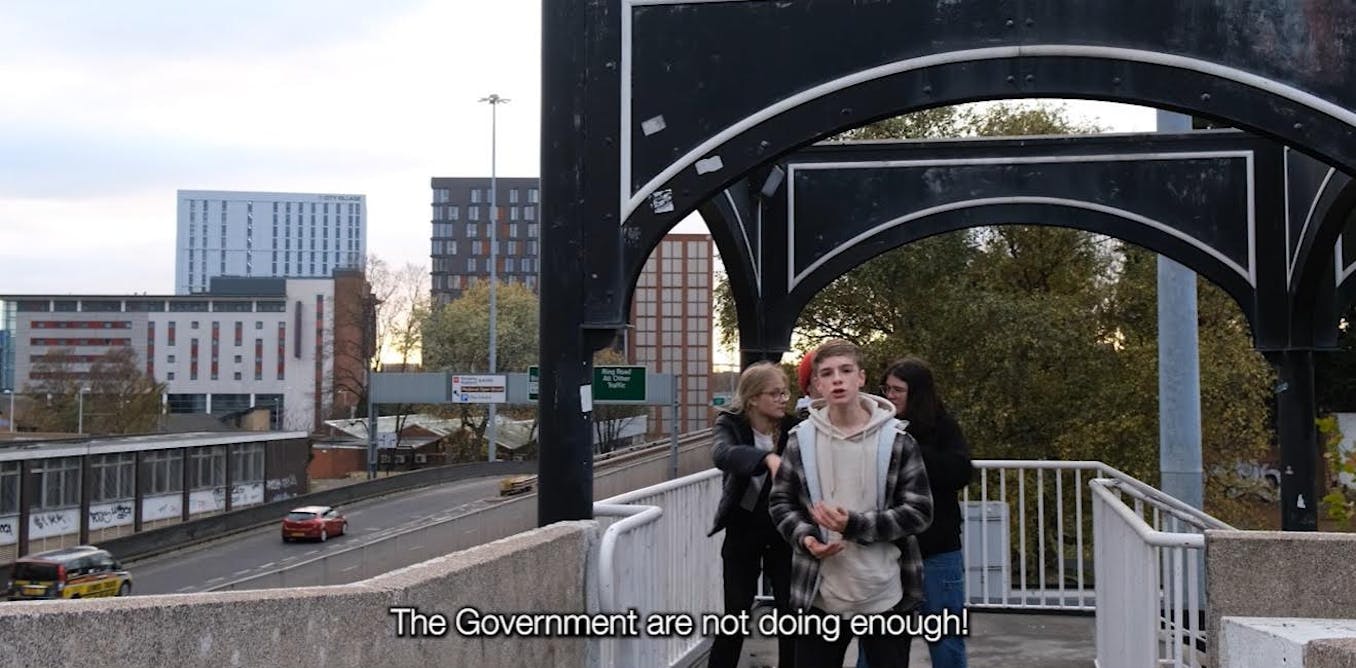
One autumn evening in 2021, I was co-facilitating the first of ten creative sessions with young people in the Daimler Warehouse, Coventry. It’s home to Highly Sprung Physical Performance, a partner in a pilot project called With One Breath. I was there to use theatre, photography and creative writing to explore the climate crisis.
My collaborator, Becky Warnock, a socially engaged artist, ran an exercise to take stock of how the group were feeling about the issue. She asked them to place themselves on a continuum in response to a series of statements – one end of the room meant they agreed with the statement, while the other end meant they disagreed.
It became clear that many young people are incredibly knowledgeable about the climate crisis. However, when Warnock asked them to respond to the statement, “I have a voice in climate change debates”, most of the group huddled on one side of the room, showing that they “disagreed”.
The climate crisis has a communications problem. How do we tell stories that move people – not just to fear the future, but to imagine and build a better one? This article is part of Climate Storytelling, a series exploring how arts and science can join forces to spark understanding, hope and action.
My research examines what happens when artists engage directly with communities through the co-creation of art. Since 2019, I have worked in collaboration with Rachel Turner-King. We have worked in a range of settings and partnerships including schools, community centres, parks and performance spaces in Coventry, Kampala and Nairobi.
We have called this work Acting on Climate. Underpinning our projects are techniques which engage young people in discussion and act as prompts to explore local environments and share stories. We are also interested in exploring the impact of climate crisis in other parts of the world, and the perspectives of people living in these places.
Young people are often overlooked in discussions about the climate crisis. And yet they stand to be most profoundly affected by it. With One Breath sought to place young people at the heart of this discussion through collaboration across borders.
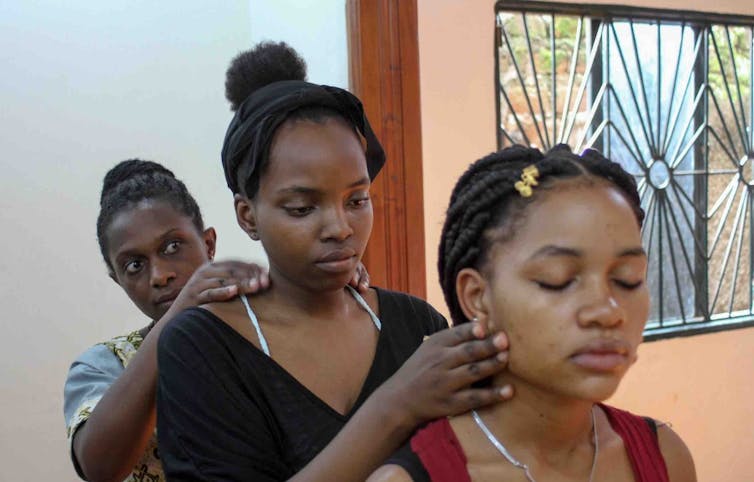
The project included the use of games and techniques adapted from drama practitioner Augusto Boal’s Theatre of the Oppressed. We tasked young people with using photography and film to document and reflect on the areas they live in. We encouraged them to shape the work and decide what to focus on. Three themes were identified: investigating power and responsibility; reflecting on processes of globalisation; and producing positive visions for alternative futures.
The project prompted dialogue across the two locations. While many young people in the UK felt insulated from the immediate impacts of the climate crisis, hearing from Ugandans already living with and adapting to environmental disruption made those unequal realities impossible to ignore.
Our work highlighted that young people often feel a lack of agency to make change, but also feel simplistically portrayed and tokenised as beacons of hope and change. This tokenisation places responsibility on young people to adapt to, and transform, a problem that they have had little role in creating.
Communities in countries like Uganda are frequently excluded and marginalised when it comes to conversations and action on the climate crisis, so the young people we worked with in that country faced a double bind. They are both marginalised due to their age and where they are from.
As such, this transnational project provided an opportunity to amplify voices not typically heard.
Complexity and collaboration
My research took on new dimensions through Fair Play Kenya 2025, a festival at the National Theatre in Nairobi as part of the British Council’s Kenya 2025 season.
The festival considered relationships between climate crisis, conflict and land justice. One strand involved connecting three groups of young people from Nairobi, Derry/Londonderry and Birmingham through in perso
Read More