Exploring a new frontier for soil carbon credits, San Antonio-based startup Grassroots Carbon said today that it has reached 1.9 million tons in carbon removal and storage, and more than 1.5 million in retired credits.
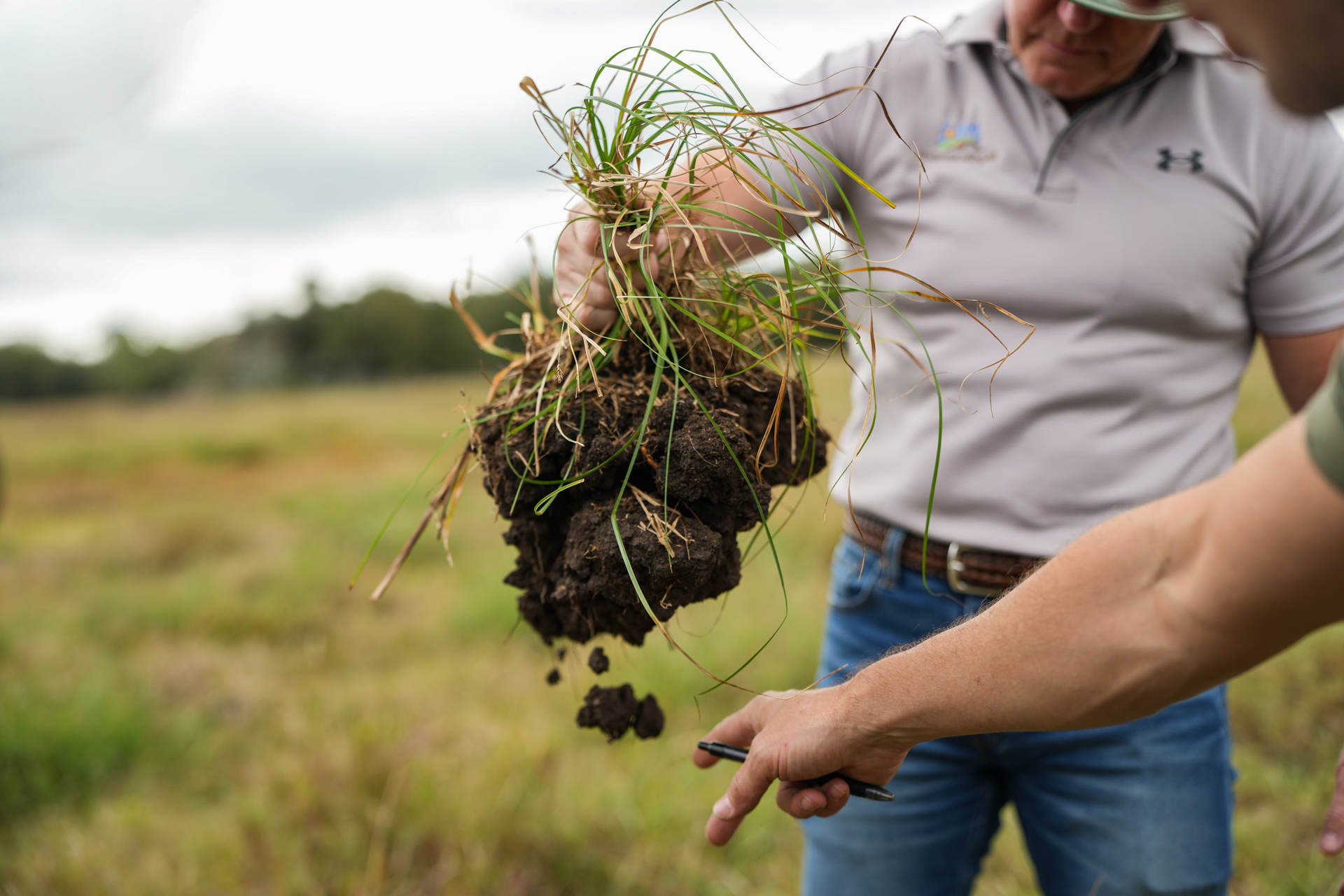
Founded in 2021, Grassroots Carbon works with ranchers to improve soil health via sampling, regenerative practices that include rotating paddocks with mobile fencing, software tools such as PastureMap and what it calls “the largest privately collected soil carbon dataset in the U.S.”
Selling the credits to corporate buyers including Nestlé, Microsoft and Chevron, the company shares the revenue with ranchers, providing supplemental income to landowners who are struggling with overseas competition, high debt loads, reduced appetites for beef in developed countries and low prices driven by corporate mega-ranches that use environmentally destructive, carbon-intensive practices to raise and slaughter cattle.
There’s no upfront cost to participate — Grassroots provides soil testing, education in regenerative practices, access to PastureMap and its proprietary dataset, and credit marketing for free — and the company says it has made $40 million in direct payments to ranchers for carbon sequestered in soil.
“We’re not only storing carbon but helping provide cleaner water and money for locals, turning what might be thought of as a compliance checkbox into a positive story and a net benefit for communities,” said Grassroots Vice President of Carbon Solutions Katie Pearson during a panel discussion at Trellis Impact 25. (Grassroots Carbon paid to exhibit at the event.)
The Great Plains carbon sink
Covering more than 650 million acres, America’s Great Plains are one of the greatest carbon sinks on the planet. Much of this land has been degraded by development, drought and overgrazing; nearly 7,000 acres of native grassland are lost in the U.S. every day, according to the National Beef Grasslands Initiative.
These trends are being accelerated by urbanization and the increasing demand for cheap land for giant, water-thirsty data centers. In Texas alone — where open range is abundant and power is cheap — more than 1,000 acres a day are paved over with concrete, said Chad Ellis, CEO of the Texas Agricultural Land Trust, during the TI25 session: “It’s the ‘Oh, shit’ moment.”
Overgrazing and heavy water consumption by industrial-scale ranching, which generated more than $260 billion in revenue in 2024, contributes to the destruction of grasslands. Grassroots’ model incorporates not only state-of-the-art soil core testing down to one meter in depth and sophisticated mapping tools, but also traditional practices followed by herders for millennia — including rotational grazing, in which cattle are moved from one contained paddock to another so native grasses and shrubs, and the soil in which they grow, can recover.
Containing he
Read More