Next month sees the full implementation of climate legislation that is already reshaping global decarbonization efforts. But many sustainability professionals remain only dimly aware of its existence.
By deciding to charge a fee on the embodied carbon in imports from hard-to-abate sectors, the European Union has triggered new climate initiatives around the world. Companies in affected industries and beyond are scrambling to improve data gathering and looking for emission cuts. And multiple countries have implemented their own carbon-pricing schemes in a bid to lower costs for exporters.
“This is a moment when carbon risk stops being a footnote in a sustainability report and really starts showing up in the profit and loss,” said David Linich, a sustainability partner at PwC.
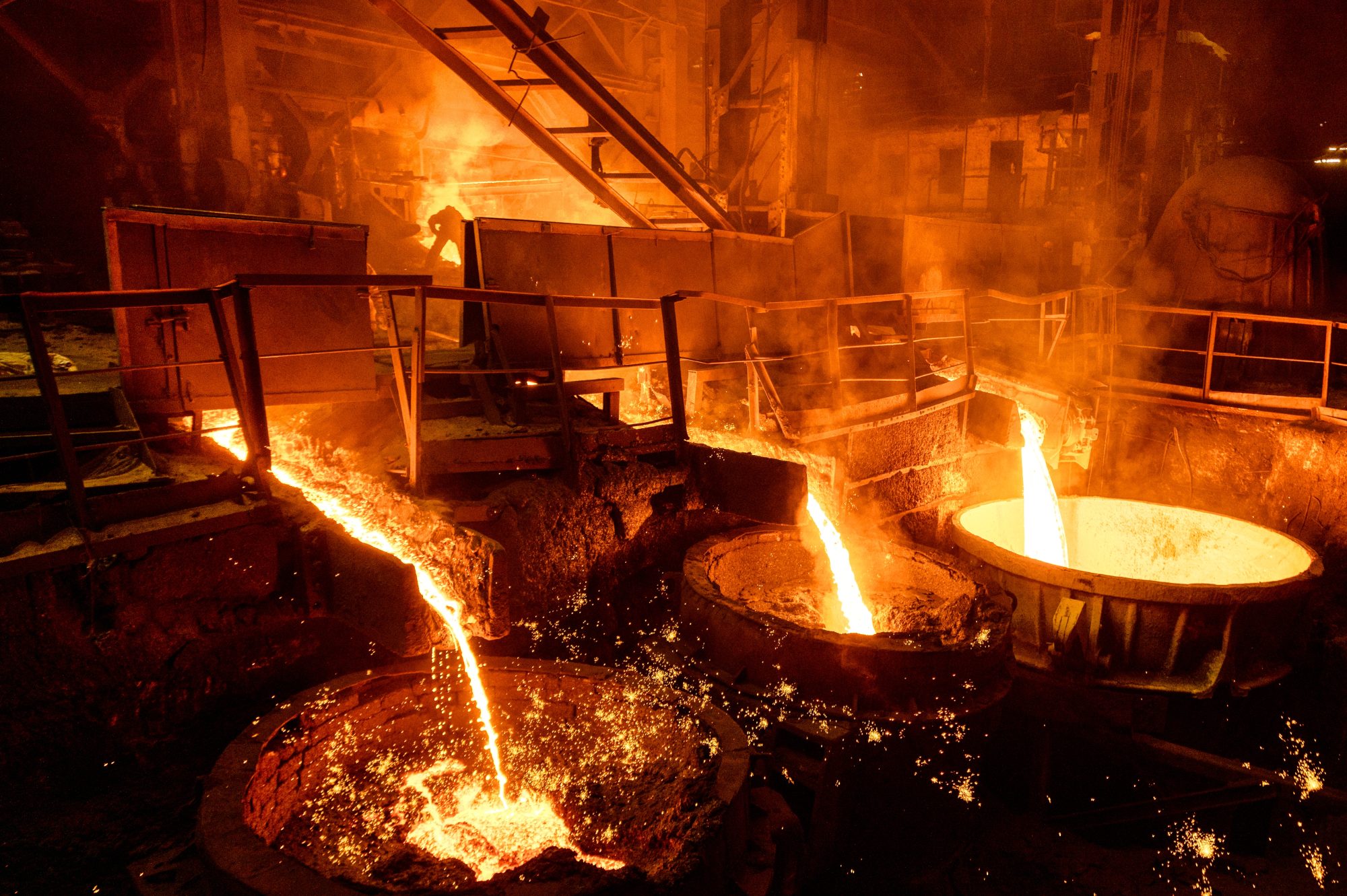
Those in directly affected industries will likely be familiar with the Carbon Border Adjustment Mechanism (CBAM). Companies that import products into the EU from industries covered by the law — cement, aluminum, electricity, hydrogen, fertilizers and iron and steel — already have to report the embodied carbon in their purchases. From January onwards, importers will also be subject to a fee for that carbon. The price will be pegged to the EU Emissions Trading Scheme, where allowances currently trade for around $90 per ton of carbon dioxide equivalent
Trellis spoke with consultants, trade organizations and sustainability professionals to understand how the impact of CBAM will ripple out beyond the sectors covered by the legislation. Here are three key points to consider.
CBAM’s impact is broad — and could get more so
The legislation only covers six industries at present, but many other sectors are or will be affected.
Take emissions data. Companies that import steel and other covered products into the EU are being asked by buyers to provide detailed greenhouse gas numbers. To gather that information, exporters are turning to their suppliers for data, who in turn are passing requests to their suppliers. “It resonates through the entire supply chain,” said Jennifer McIsaac, chief market intelligence officer at ClearBlue Markets, a consultancy.
That’s going to mean more work for some sustainability teams, but it also presents competitive opportunities. Tracking emissions data through complex supply chains requires cooperation from experts in procurement, sustainability, legal and other departments. “Those companies that break down those silos the fastest will, we believe, manage risk at the lowest cost,” said Linich.
CBAM’s direct impacts may also grow. At present, the regulation applies to raw materials. But that risks handing a competitive advantage to manufacturers outside the E.U., which can use the same materials without paying a carbon fee and then import their products into the region. Media reports suggest that the EU is considering countering that by expanding the legislation to some finished products, including car doors and stoves. The scheme is also designed to be expanded to other industries, with chemicals potentially coming next.
Get ready to compete on carbon
Solventum, a healthcare company spun off from 3M in 2024, is exposed to CBAM through aluminum and steel imported into Europe by its dental, filtration and purification businesses. After talking to suppliers and estimating the quantity of carbon involved, Sustainability Director Maria Watson decided it would be more efficient to use default emission values
Read More