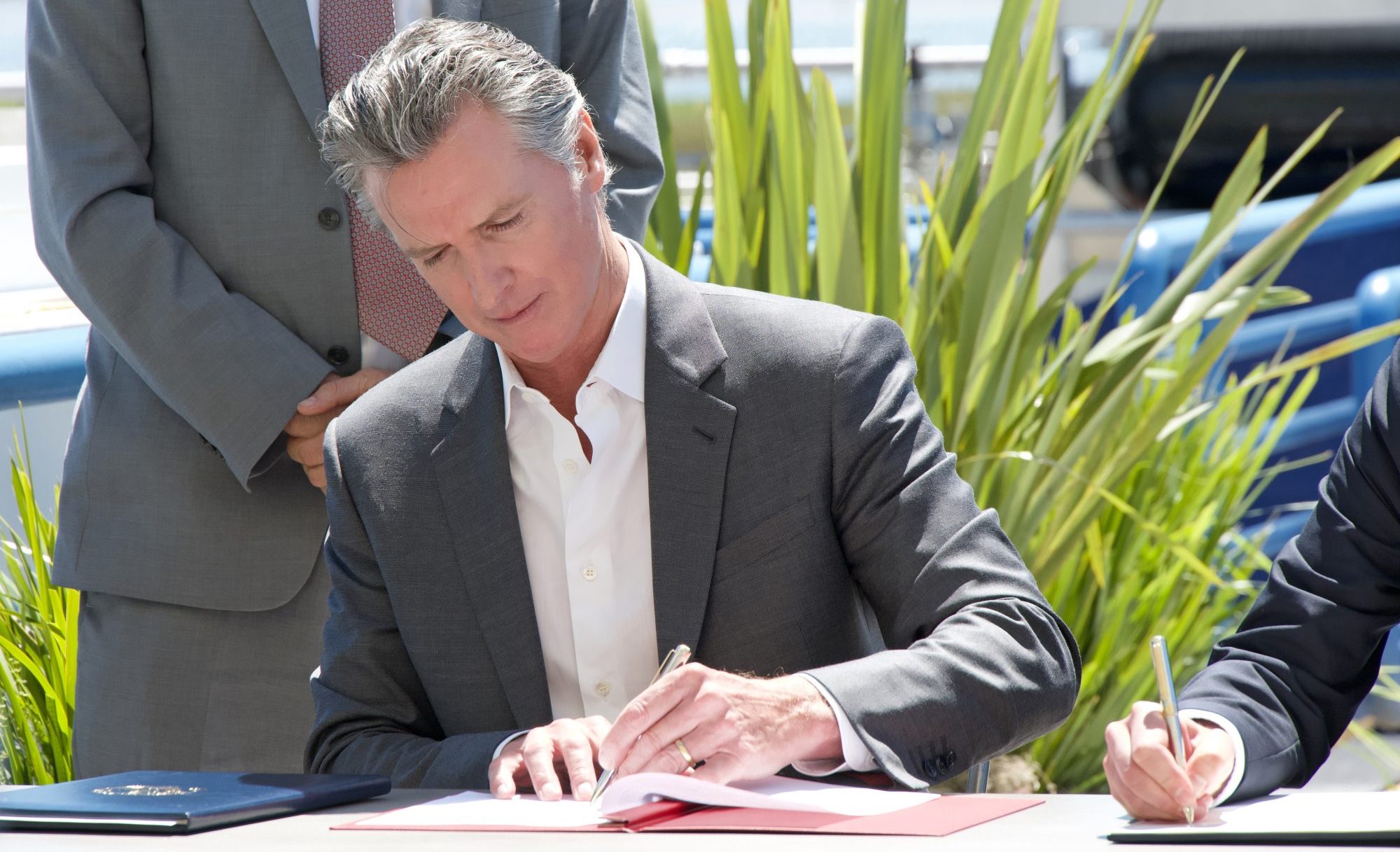

Of the 917 bills that reached California Gov. Gavin Newsom’s desk over the past month, 794 were signed into law.
His decisions related to energy and environmental impacts reflect contrasts. For instance, he continued the state’s cap-and-trade program while green-lighting new oil drilling and rejecting virtual power plant advancement.
As for supply chains, the passage of a requirement for companies to disclose heavy metals in prenatal vitamins contrasts with rejected proposals to ban forever chemicals in cookware and plastic glitter in personal care products.
Here are the key new laws, as well as legislation that perished by Newsom’s pen.
Signed into law
Heavy metals disclosure: In 2027, prenatal vitamin purveyors will have to detail how much lead, cadmium, mercury or arsenic appear in their supplements under Senate Bill 646, which passed without opposition. A similar metals disclosure law for baby food went into effect in January.
“Cap and invest”: Newsom refreshed California’s existing cap-and-trade program through 2045. Funds enabled by Assembly Bill 1207 and Senate Bill 840 are meant to help efforts that include high-speed rail and wildfire prevention.
Drill, baby drill? Many environmentalists decried Senate Bill 237, which eases the approval of up to 2,000 oil wells in Kern County in the south of the state, purportedly to stabilize gasoline supplies.
Carbon capture win: Senate Bill 614 creates a regulatory structure for developing underground storage and pipelines for captured carbon dioxide, ending a moratorium. It’s seen as a boost for the growing carbon capture and storage industry.
Regional power: As the federal government decimates previous support for renewable energy projects, California is expanding its role within a regional power market. Assembly Bill 825 enables the state to trade more clean energy with other Western states.
Small solar boon: Under Assembly Bill 1104, small and midsize solar developers will no longer be considered “public works” organizations, sparing them red tape around labor rules.
Electrification plans: Assembly Bill 39 requires towns above 75,000 people to detail how they will electrify buildings and EV charging systems, especially in underserved communities.
Breakthrough for in-state glass: In a challenged market for recycled glass, Assembly Bill 899 updates California’s Beverage Container Recycling law to let CalRecycle pay higher incentives to in-state manufacturers that use recycled glass.
Vetoed
Forever chemicals stay: Senate Bill 682 sought to restrict harmful perfluoroalkyl and polyfluoroalk
Read More