

Few of the nearly 8,000 companies with validated science-based net zero targets make headlines for reaching that milestone. But for Shein, which has come to symbolize the excesses of cheap, trend-driven fashion, the news drew widespread criticism from sustainability experts.
“If Shein were sincere, perhaps we wouldn’t see emissions grow quite so astronomically recently,” said Maxine Bédat, director of the New Standard Institute, a New York City think tank.
Still, when the Science-Based Targets initiative (SBTi) validated its 2050 climate targets May 23, Shein was among the minority of major fashion brands that made the list. Is it possible that what might be the world’s most-polluting clothing brand is turning a corner?
Not according to the San Francisco watchdog group Stand.earth, which on June 3 gave the company an “F” on its annual Fossil-Free Fashion Scorecard.
“If Shein were a country, it would be the 100th-biggest emitter in the world,” the report said, generating almost as much pollution as Lebanon, “having increased Scope 3 emissions by over 170 percent in just two years.” Shein flunked in a variety of categories, including commitments and transparency, renewable energy transition, advocacy and clean shipping. Its highest mark was a D-minus for materials and circularity.
Although that report was compiled before Shein’s SBTi validation, its core complaints remain largely unaddressed by the company.
Skepticism over the clothier’s net zero quest led Ken Pucker, an industry veteran and teacher at Dartmouth and Tufts, to question on LinkedIn whether sustainability commitments themselves are credible. “I am dubious,” he said. Among the reasons for his skepticism:
- In 2023, Shein’s emissions rose by 45 percent from a year earlier, according to the company’s 2023 sustainability and social impact report.
- Even with a small emissions jump, the company would have to shave roughly one-third of its Scope 3 emissions in the next half decade to satisfy its new targets, Pucker noted.
- Since its launch in 2008 in Nanjing, Shein has not yet produced a sustained drop in emissions.
Shein’s growth
The brand has rocketed to popularity with an on-demand, direct-to-consumer business model that flew some 900,000 packages a day to individuals in the U.S. last year.
“If you’re looking from a production side, there are many things that Shein does that, in fact, the sustainability sector has been peddling as a great idea for a very long time,” said Veronica Bates Kassalty, a fashion consultant and former World Bank economist in London. For example, brands have been trying to figure out how to sustain and profit from making limited, small runs of fashions rather than overproducing.
“The only people who managed to crack it: Shein,” she said. “And that’s what enabled them to catapult themselves into the stratosphere, because they’re constantly producing something new all the time, and it’s no great risk to them.”
The United States’ de minimis exemption has enabled the company to jet goods to the country, duty-free, in packages worth $800 or less. Until the White House closed that loophole May 2, the policy had helped Shein snowball among fashion influencers flaunting cheap and trendy wardrobe hauls.
That, and the Trump administration’s seesawing tariffs on imports, have slowed Shein’s roll. The company boosted spending per customer by 35 percent but lost 30 percent of customers from April to mid-May, compared with the same period last year, according to Bain & Company. Amid this challenging environment, Shein’s target for an initial public offering moved again recently from London to Hong Kong. It had originally set its sights on New York.
What’s the plan?
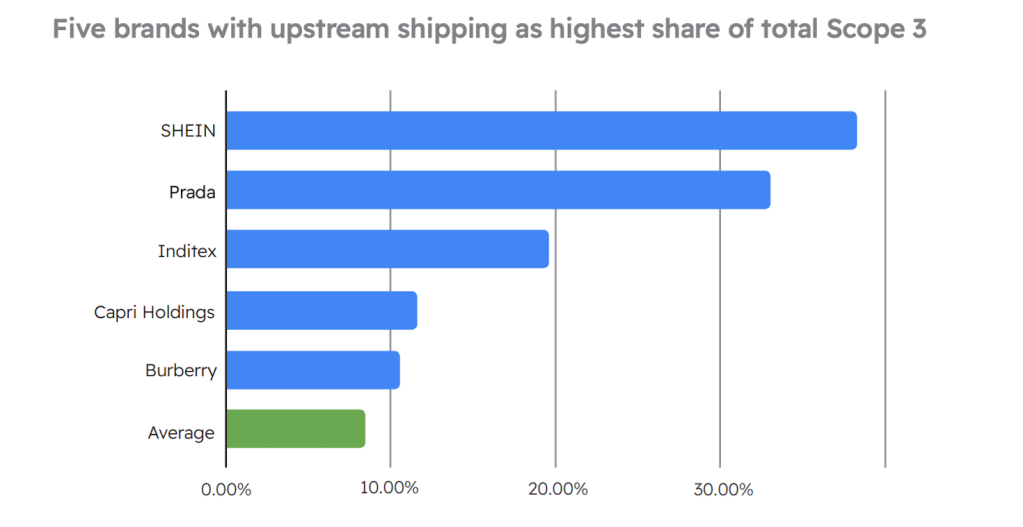
Shein’s net zero targets appear to be standard, either at or slightly above the SBTi baseline. Roadget Business of Singapore, Shein’s parent company, seeks to reduce absolute emissions across Scopes 1, 2 and 3 by 90 percent by 2050. Its goals for 2030 include a 42 percent reduction in Scope 1 and 2 emissions and a 30 percent drop in Scope 3. (Scope 3, including the indirect supply chain and transportation emissions, comprised 99 percent of the company’s emissions in 2023.)
Yet it’s important to note that when the SBTi legitimizes any corporate net zero targets, it’s only a first step; there’s no enforcement for what happens next, according to Bédat, author of “Unraveled: The Life and Death of a Garment.”
“There is a real misunderstanding of what an approved target means, and this ends up being used as greenwashing,” she said. “The target approval is not an approval of the quality of the plan for reduction, it simply means that the target is in line with the requirements.”
But sharing a credible climate transition plan would help, according to Bédat. “Elements of credibility include: how are they incentivizing
Read More